Treatment That Follows the Trail
Ant Control in Daniels for older homes and rural properties with moist or damaged wood along wooded edges
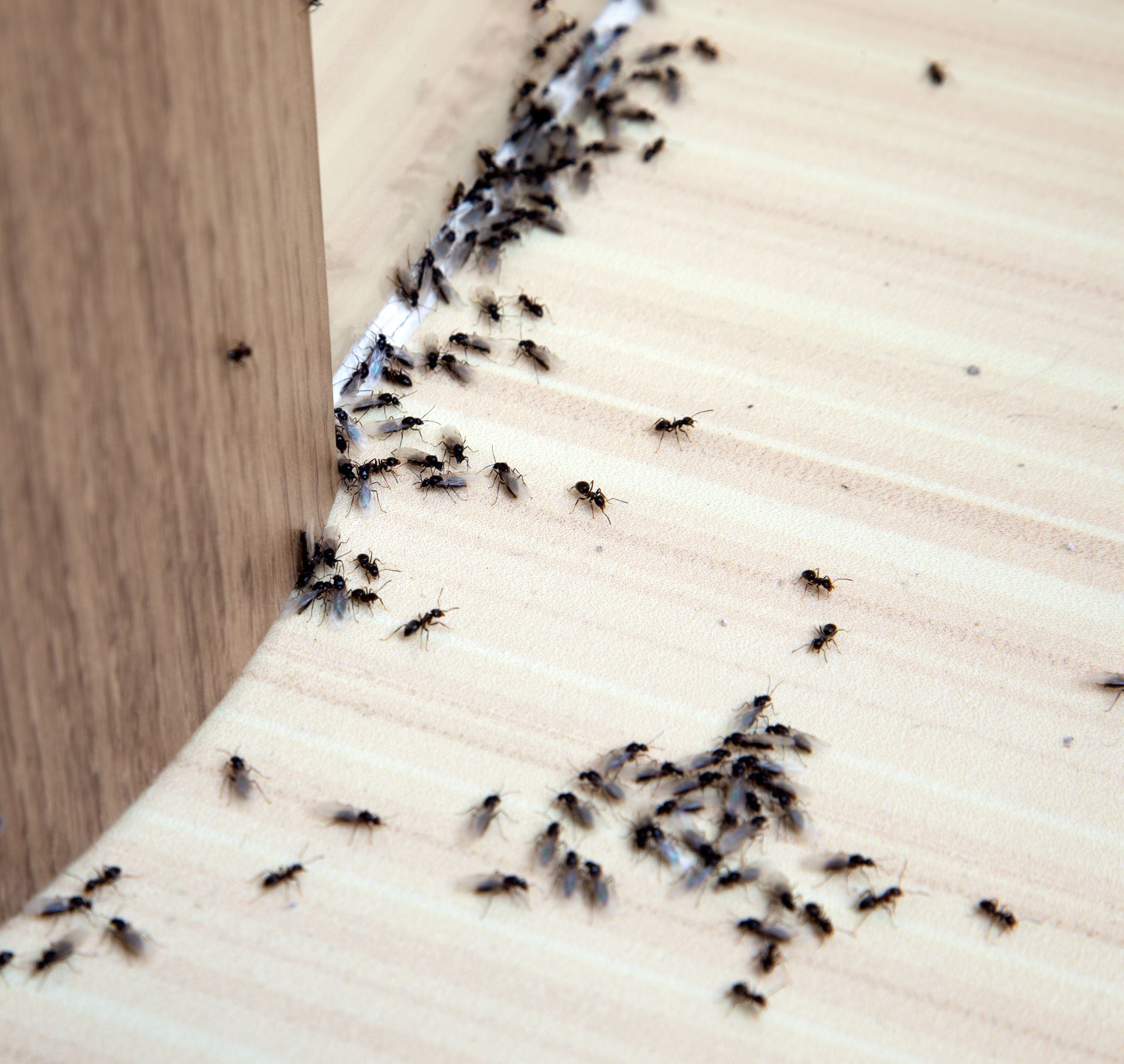
Carpenter ants nest in moist or damaged wood, and older homes and rural properties with wooded edges in Daniels and Shady Spring often have both conditions within feet of the foundation. The technician from Chapmans Pest Control LLC follows the trail to find the nest and entry points, inspects wood around the structure for carpenter ant activity, then treats nesting sites and access points with a chemical matched to ant species. You see treatment applied where the nest is located, not just where the trail appears.
The inspection looks for damaged or moisture-compromised wood in siding, trim, soffits, deck posts and crawlspace beams, then follows the ant trail back to the colony. Treatment includes a free callback between services if activity returns.
Schedule a property inspection to locate carpenter ant nests and moisture-damaged wood around your home.
What the Inspection Looks for Beyond the Trail
Following the trail tells the technician where ants are traveling, but finding the nest requires inspecting wood for damage, moisture staining and frass, which is the sawdust-like material carpenter ants leave behind when they excavate galleries. The inspection also identifies entry points around windows, doors, utility penetrations and roof-to-wall junctions.
After treatment, you notice the trail disappears, no new frass appears beneath damaged wood, and no new ants emerge from cracks or gaps in the structure. The nest is eliminated at the source, which stops the colony from expanding into additional wood members.
Chemicals are matched to the ant species being treated because carpenter ants, pavement ants and odorous house ants respond differently to active ingredients and baits. Free callbacks between scheduled services ensure that any returning activity is re-treated at no additional charge.
What Property Owners Ask About the Work
Ant control in older homes and rural properties requires identifying the nest and addressing the conditions that attract carpenter ants.
How does the technician find the nest?
The trail is followed back to the source, and wood around the structure is inspected for moisture damage, frass and hollow-sounding areas where galleries have been excavated.
What does carpenter ant frass look like?
It resembles fine sawdust and appears beneath cracks, gaps or damaged wood where ants are actively excavating galleries inside the wood member.
Why are chemicals matched to the ant species?
Carpenter ants, pavement ants and odorous house ants have different nesting behaviors and food preferences, so the treatment must match the biology of the species being controlled.
What happens if ants return between scheduled visits?
Free callbacks are included, which means the technician returns to re-treat the affected area at no additional charge.
What should you look for after treatment is complete?
The trail stops appearing, no new frass shows up beneath damaged wood, and no ants emerge from cracks or gaps in the structure where the nest was treated.
Chapmans Pest Control LLC also performs ant control in Beckley, Mount Hope, Oak Hill, Fayetteville and Princeton. The owner operates the business personally and brings seventeen years of field pest control experience to every inspection and treatment.